The 270-kilometer road between Delhi and Jaipur has historically been one of India's busiest corridors. Over the last two years, the opening of the Delhi-Dausa-Jaipur stretch of the new Delhi-Mumbai Expressway has revolutionized road travel, cutting driving times from over six hours down to just 3.5 to 4 hours.
The New Delhi-Mumbai Expressway Route
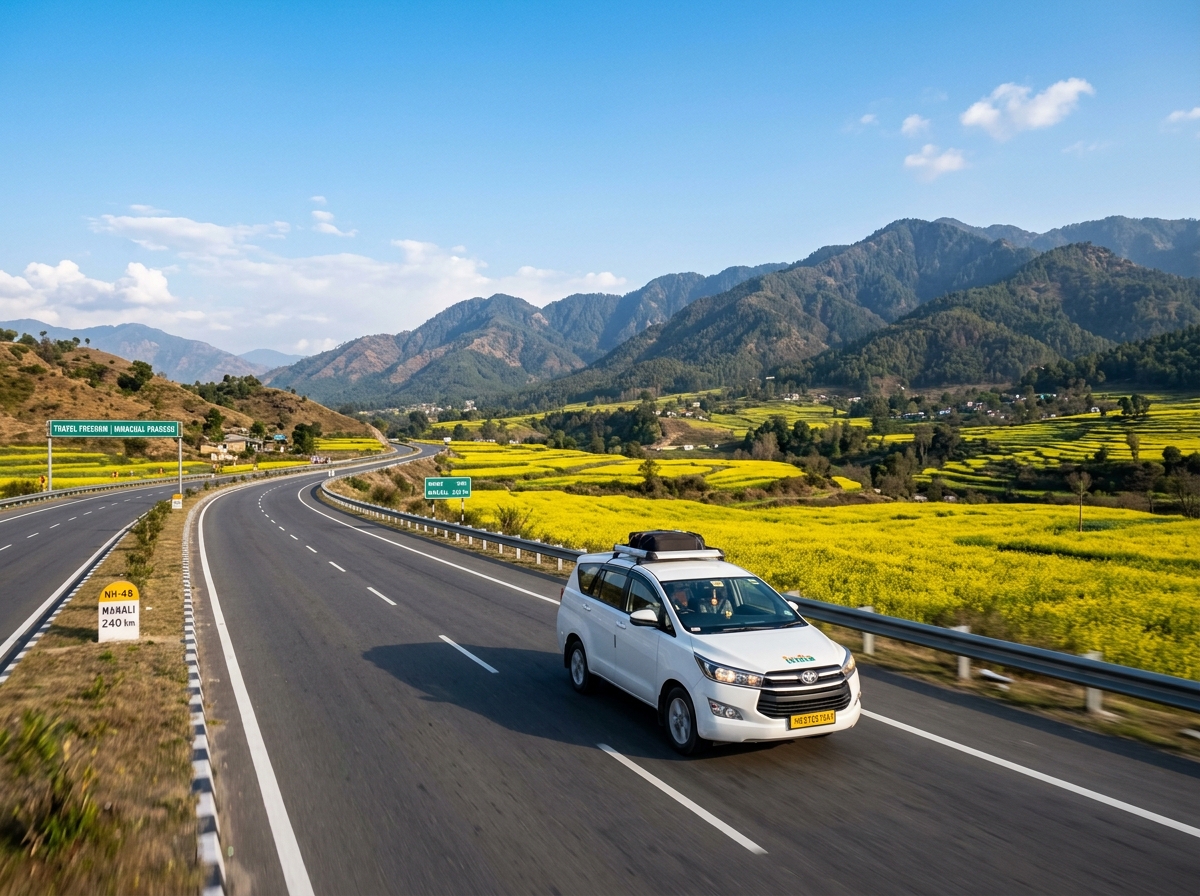
The new 8-lane expressway begins near Sohna in Gurgaon and sweeps past the Aravalli hills toward Dausa, where a smooth connecting highway leads directly into Jaipur. It is access-controlled, fully fenced to prevent cattle crossings, and paved with smooth blacktop asphalt that allows an effortless 100 to 120 km/h cruising speed.
Old NH-48 vs New Expressway: Which to Take?
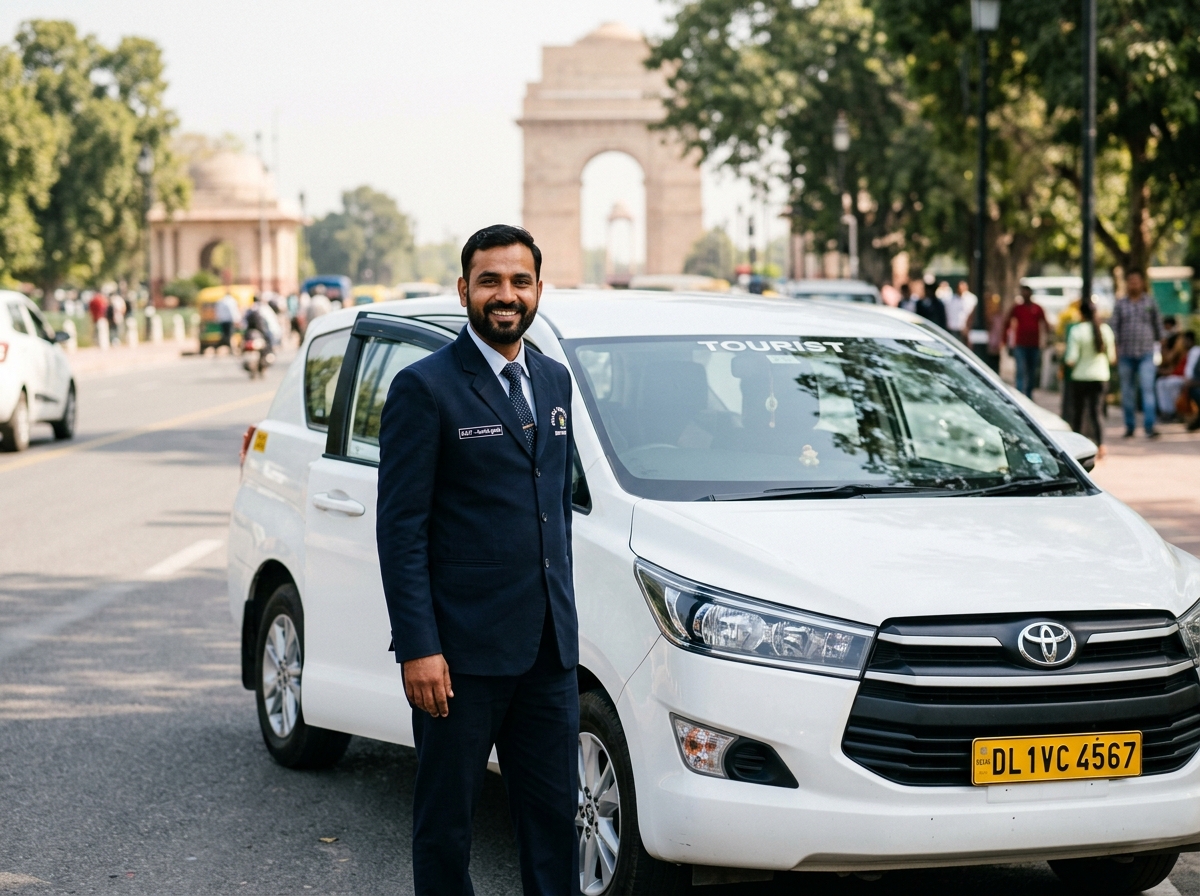
- Take the New Expressway (Recommended for 90% of trips): Fast, peaceful, minimal truck congestion, and modern service plazas. This is the route Tourist Driver India takes for all direct transfers.
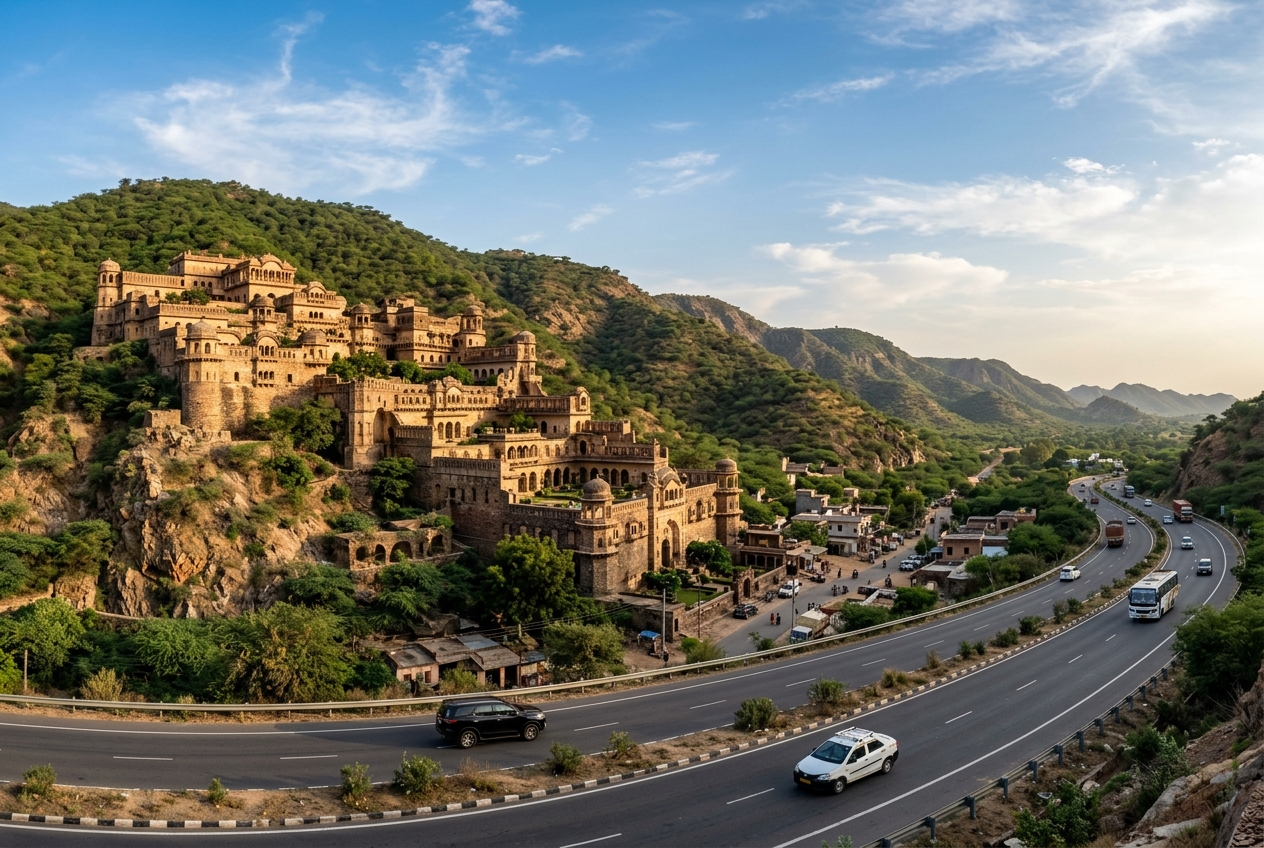
- Take the Old NH-48 Route: Only choose this if you explicitly plan to visit the 15th-century Neemrana Fort-Palace or heritage stepwells in Behror along the way.
The Neemrana Fort Palace Detour
Located exactly halfway along the old highway, Neemrana Fort-Palace is a 14-tiered heritage fortress carved into the Aravalli hills. It is a fantastic venue to stop for a royal lunch buffet or experience India's first aerial zip-line over ancient ramparts.
Best Highway Dhabas & Rest Plazas
The new expressway features sprawling wayside amenities every 40 to 50 km with pristine western washrooms, EV charging stations, prayer rooms, and popular restaurants. If you prefer authentic local dhaba culture on the older highway, your driver can recommend famous stops like Mannat Dhaba or Old Rao Hotel for stuffed tandoori parathas and sweet masala chai.